
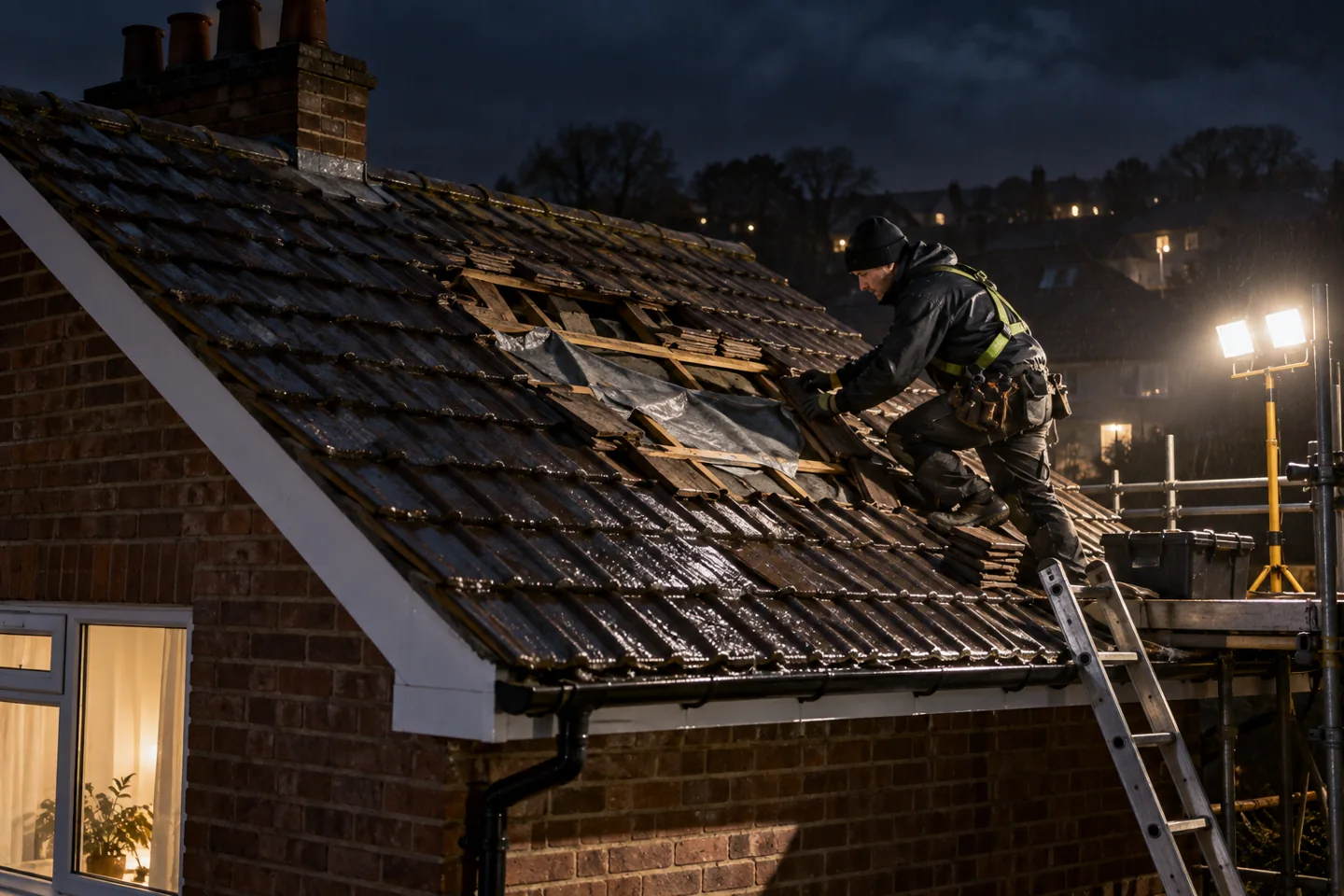
0124/7 weatherproofing
Emergency Roof Repair
An open roof needs protection first. Discuss loose coverings, sudden leaks and the safest way to limit further damage.
Explore service ↗From the first sign of a leak to an agreed repair.
A wet ceiling, slipped tile or damaged roof edge needs the right diagnosis. Tell us what has changed. We help you discuss safe access, weather protection and the repair your roof actually needs.
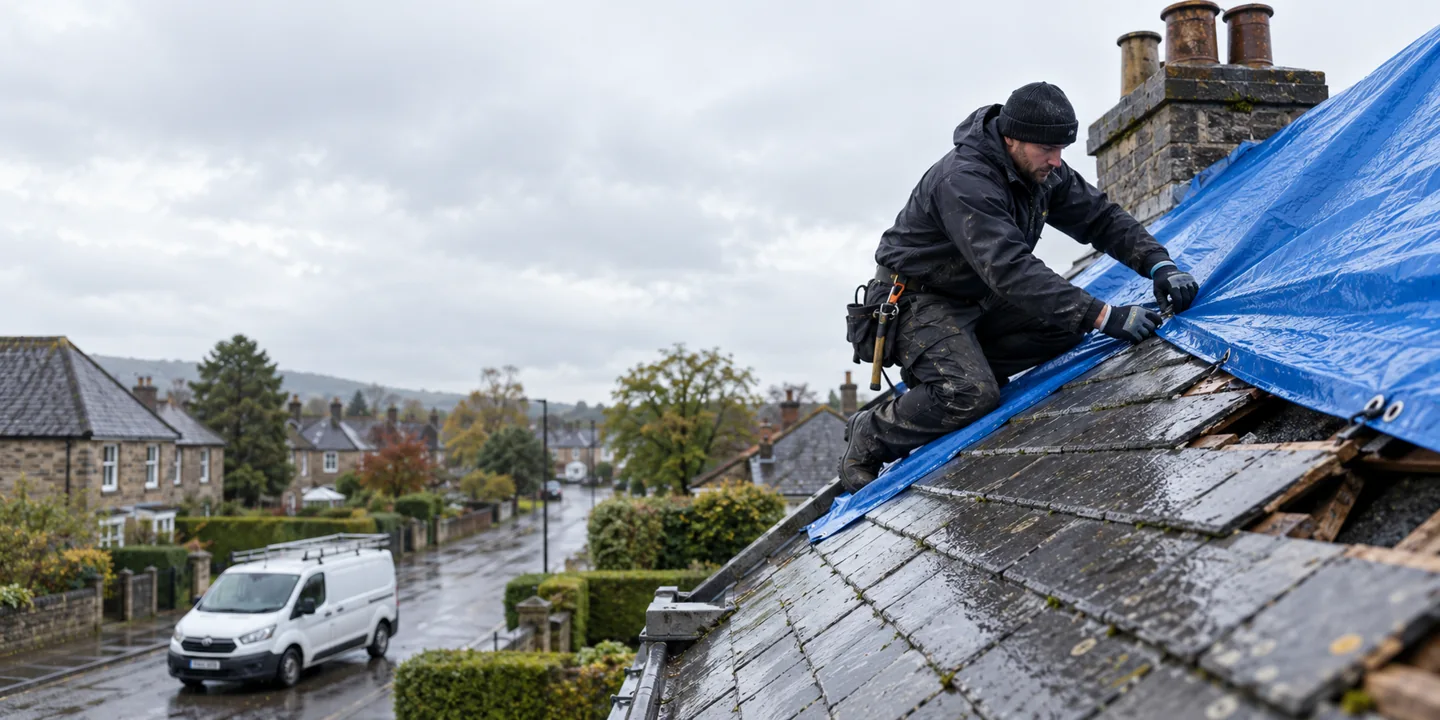
An open roof needs protection first. Discuss loose coverings, sudden leaks and the safest way to limit further damage.
Explore service ↗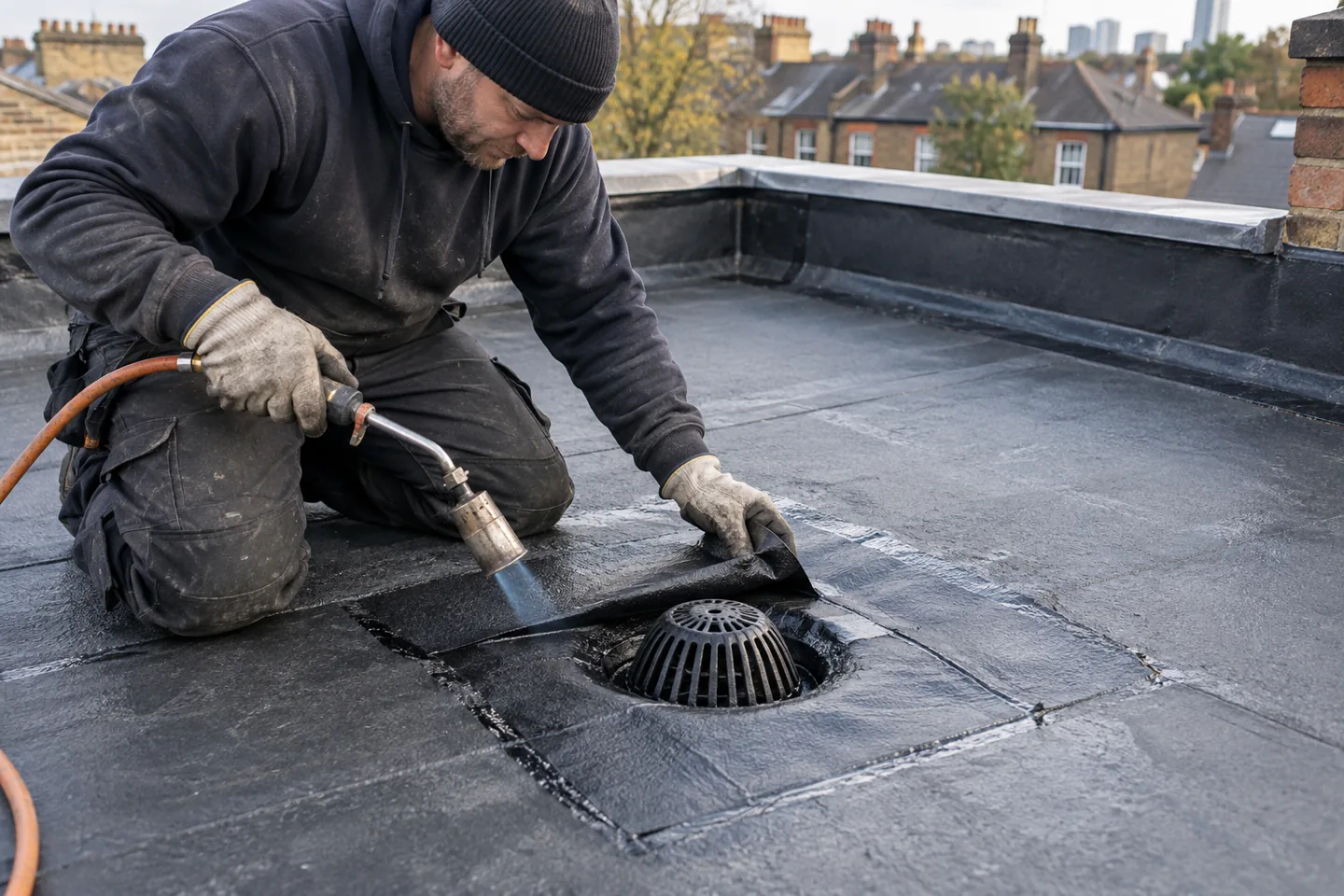
Failed laps, damaged upstands and leaking outlets need a repair that suits the existing flat roof covering.
Explore service ↗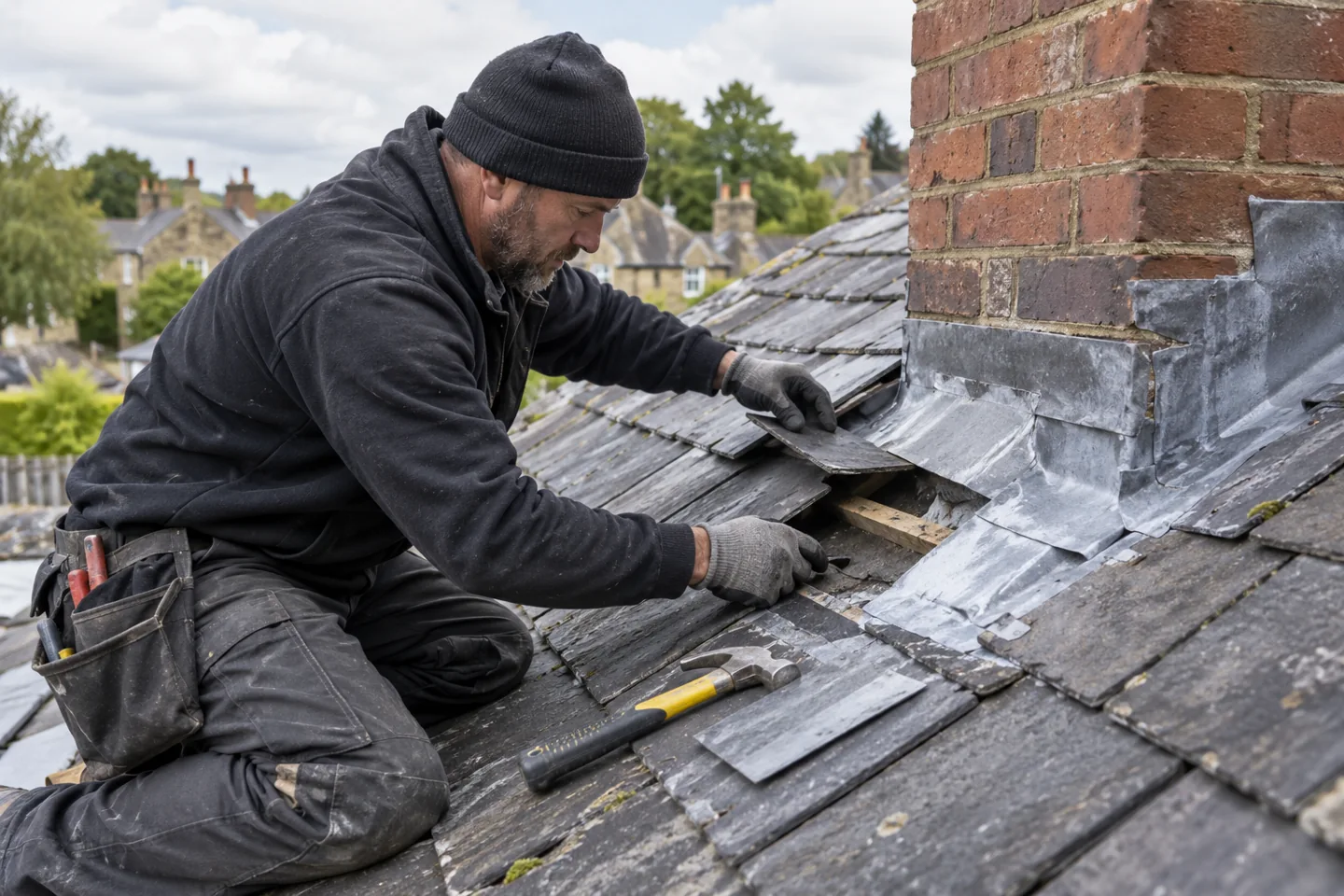
Follow the water path from the roof covering to the ceiling stain, then repair the point where rain is entering.
Explore service ↗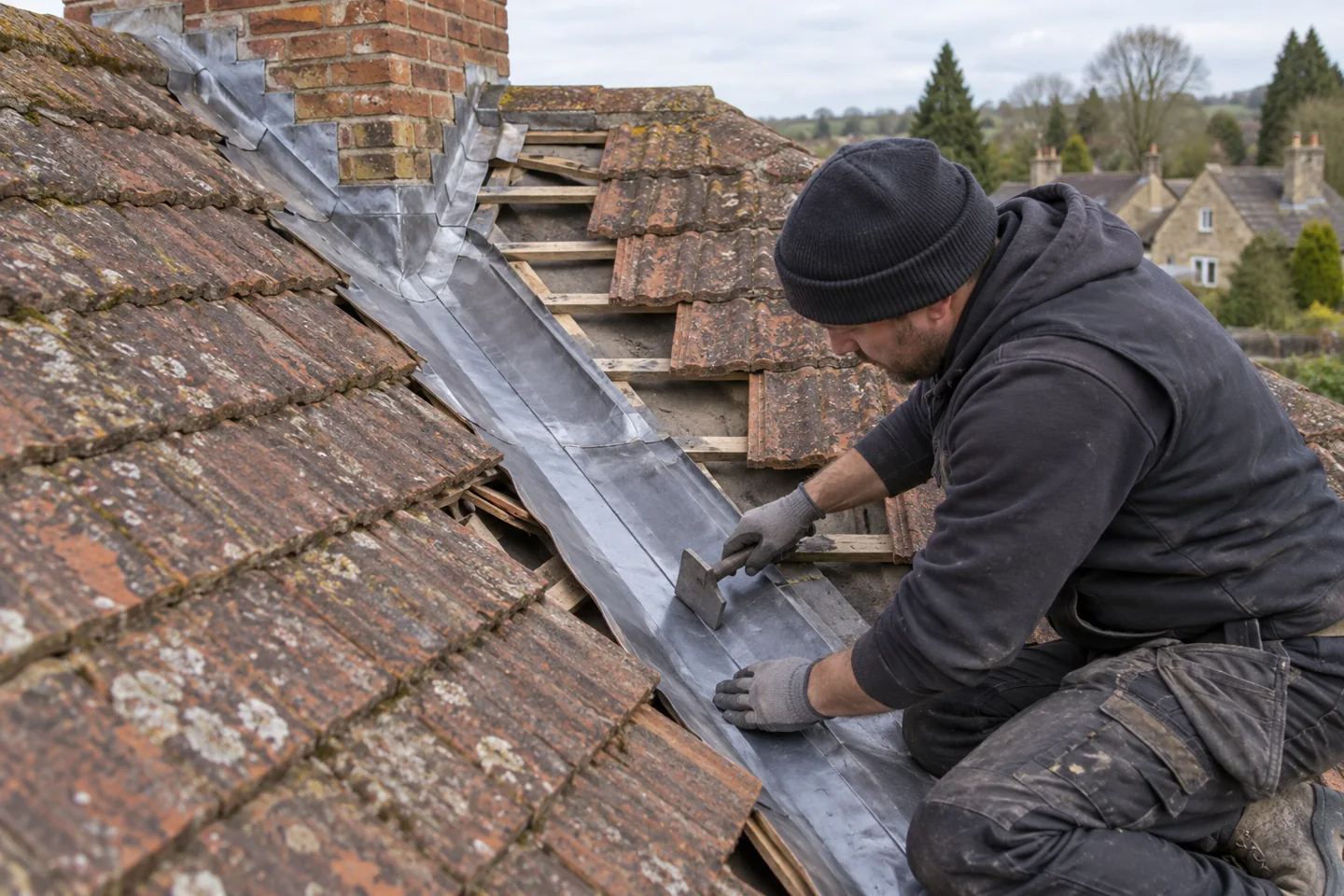
Restore the channel between two roof slopes when splits, debris or displaced tiles interrupt the rainwater route.
Explore service ↗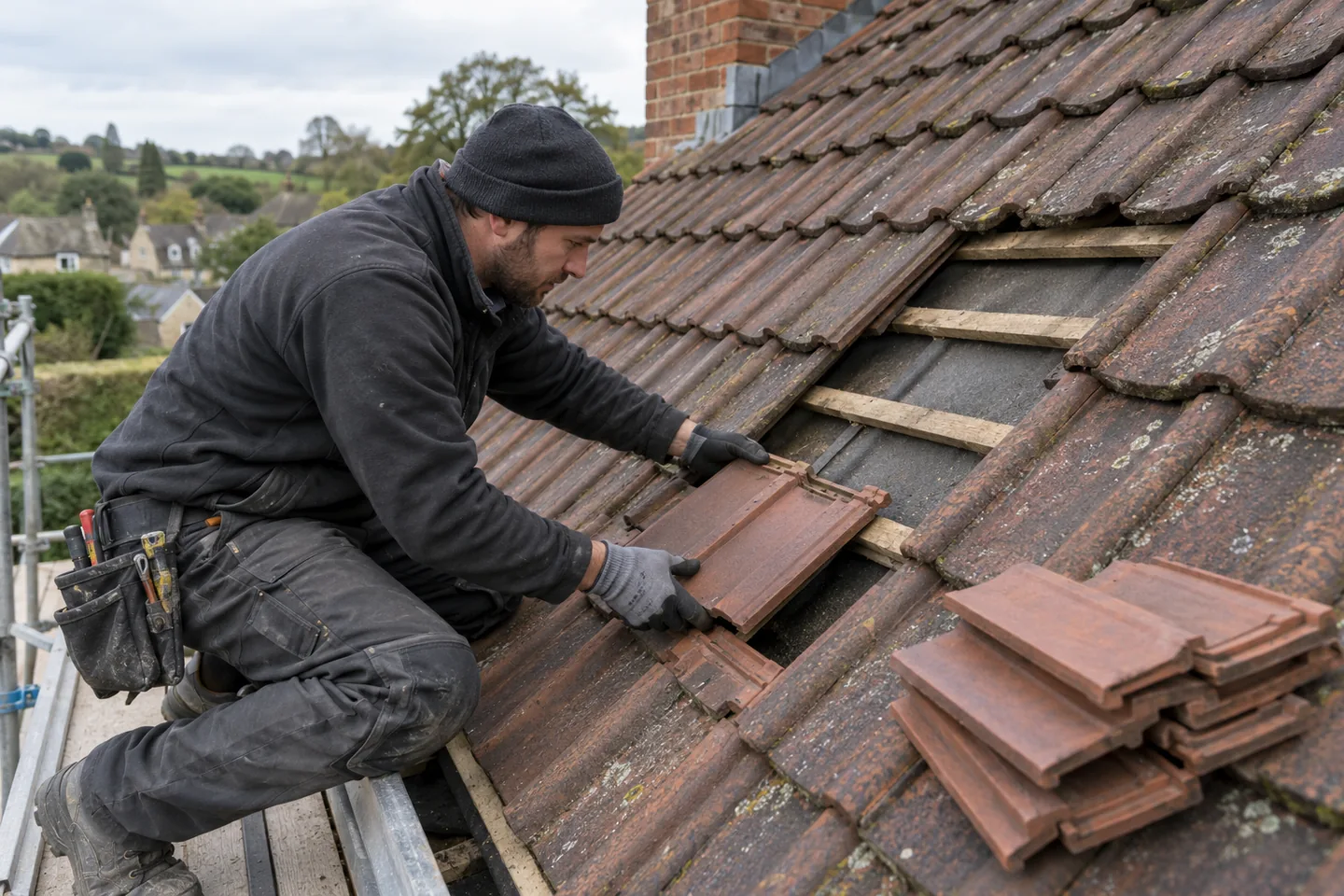
Replace broken or displaced tiles and check why they moved, including nearby fixings and the exposed underlay.
Explore service ↗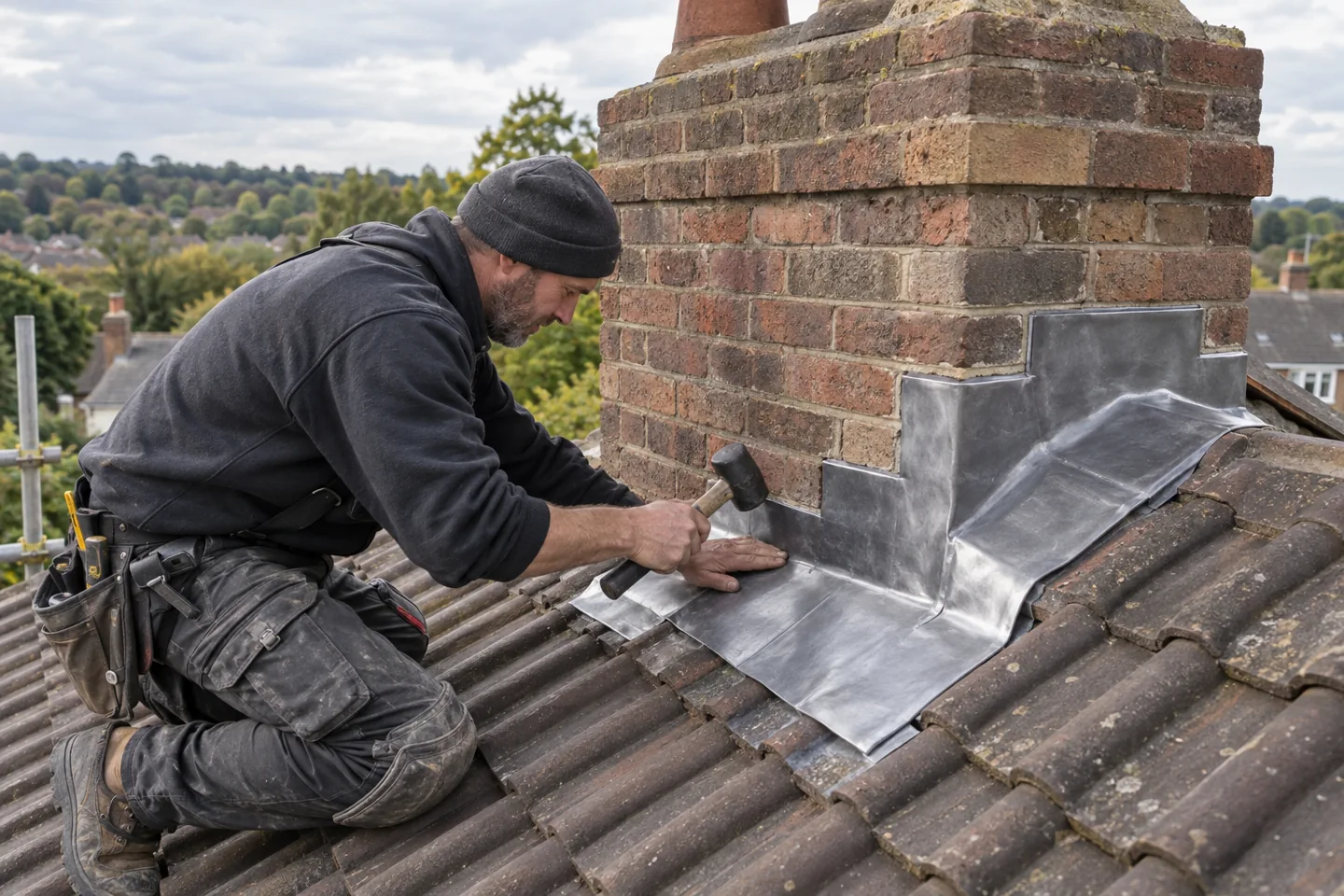
Repair the weathering where chimney masonry meets the roof, including lead soakers, cover flashing and the chase.
Explore service ↗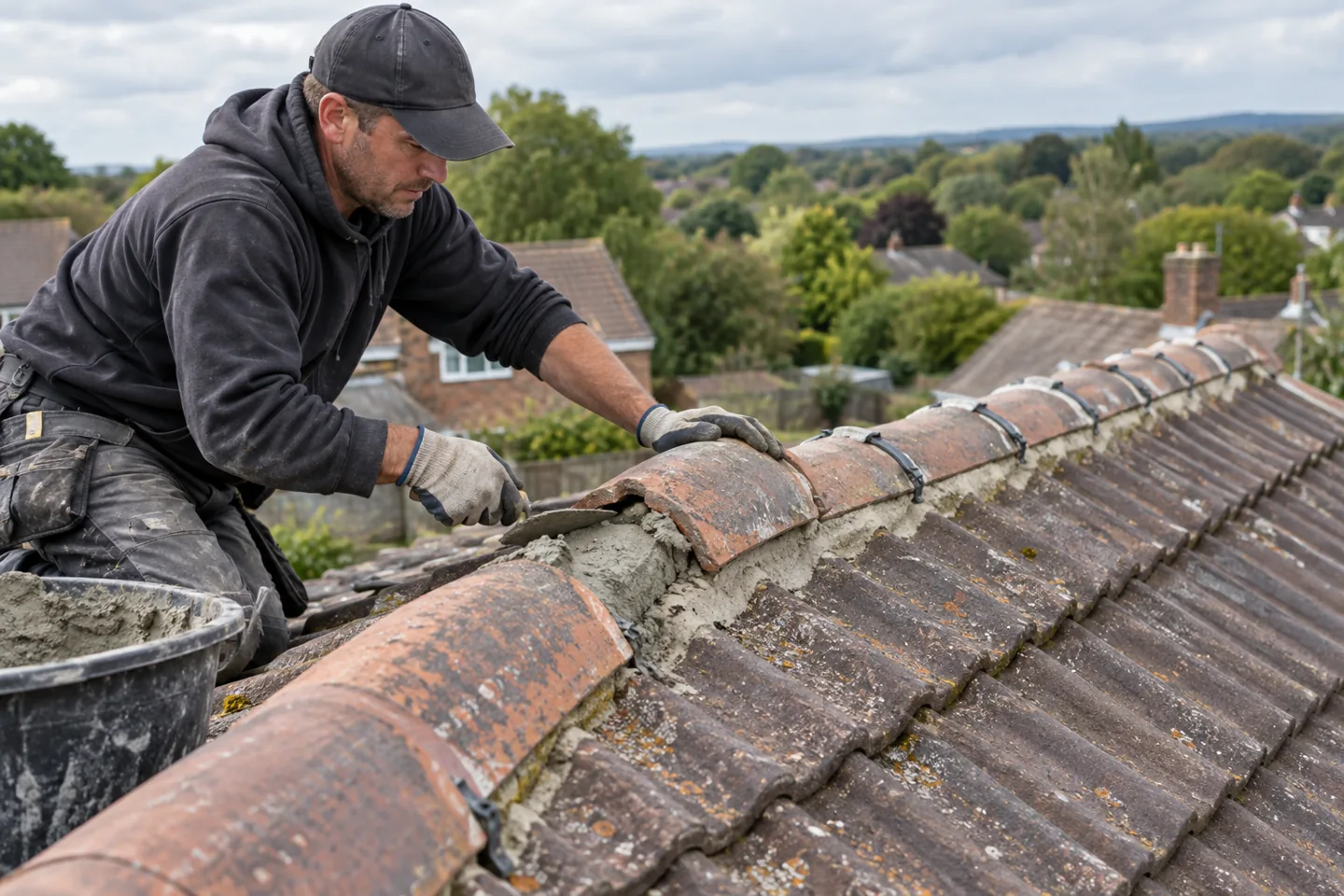
Check loose ridge tiles, failed mortar bedding and damaged dry-ridge components along the roof apex.
Explore service ↗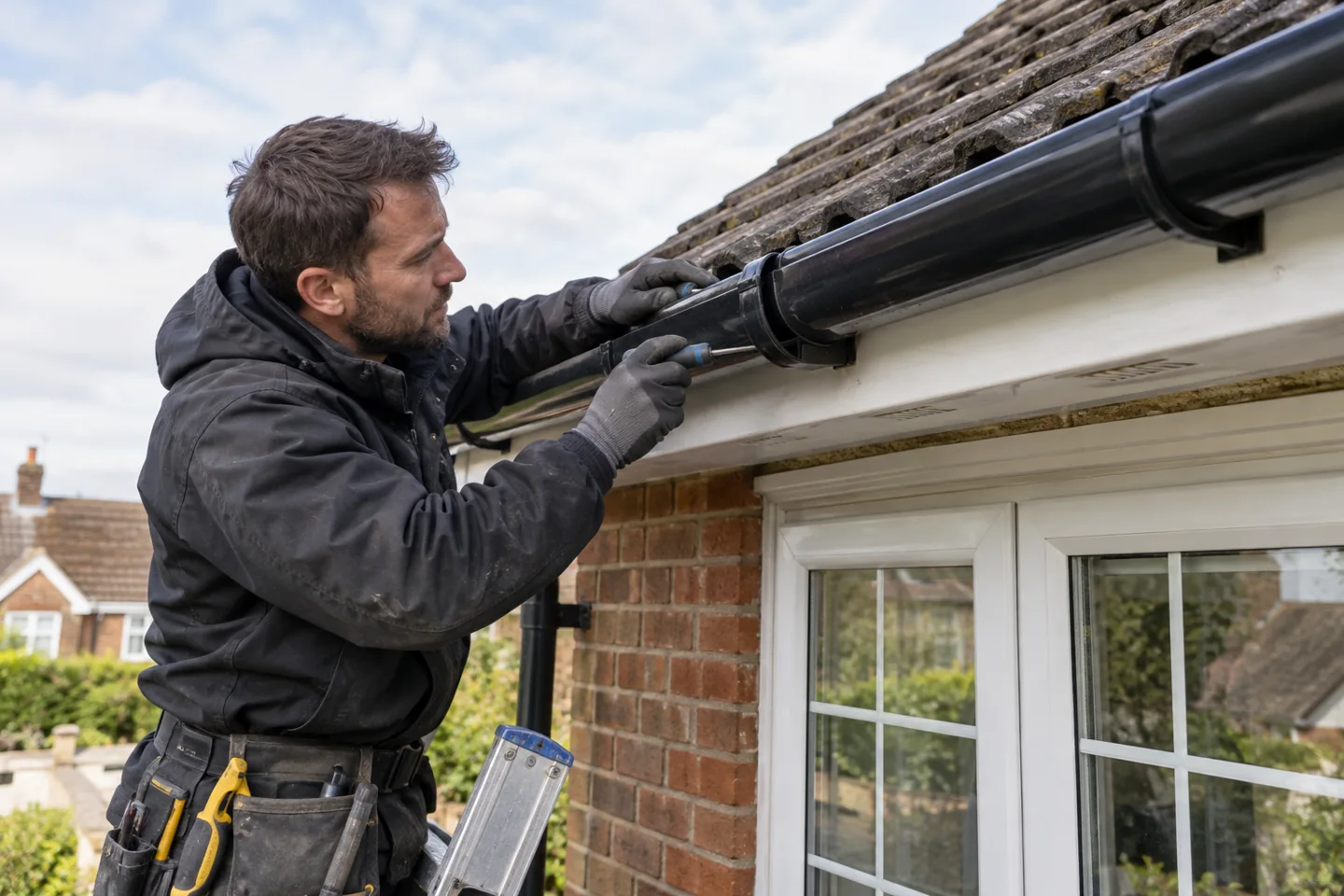
Put leaking joints, sagging runs and poor outlet connections right so rainwater leaves the eaves correctly.
Explore service ↗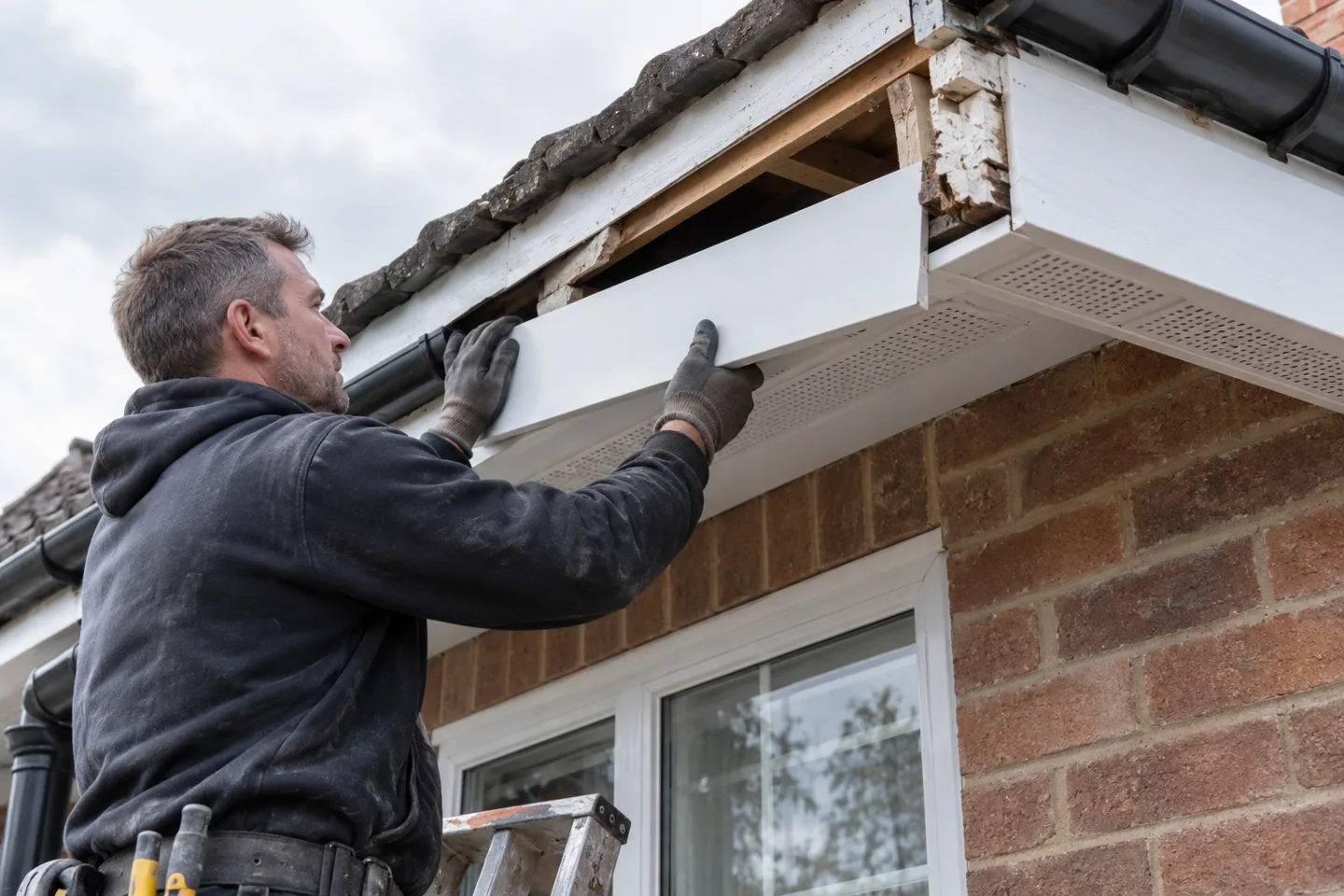
Renew damaged eaves boards and panels while keeping gutter supports and ventilation details in working order.
Explore service ↗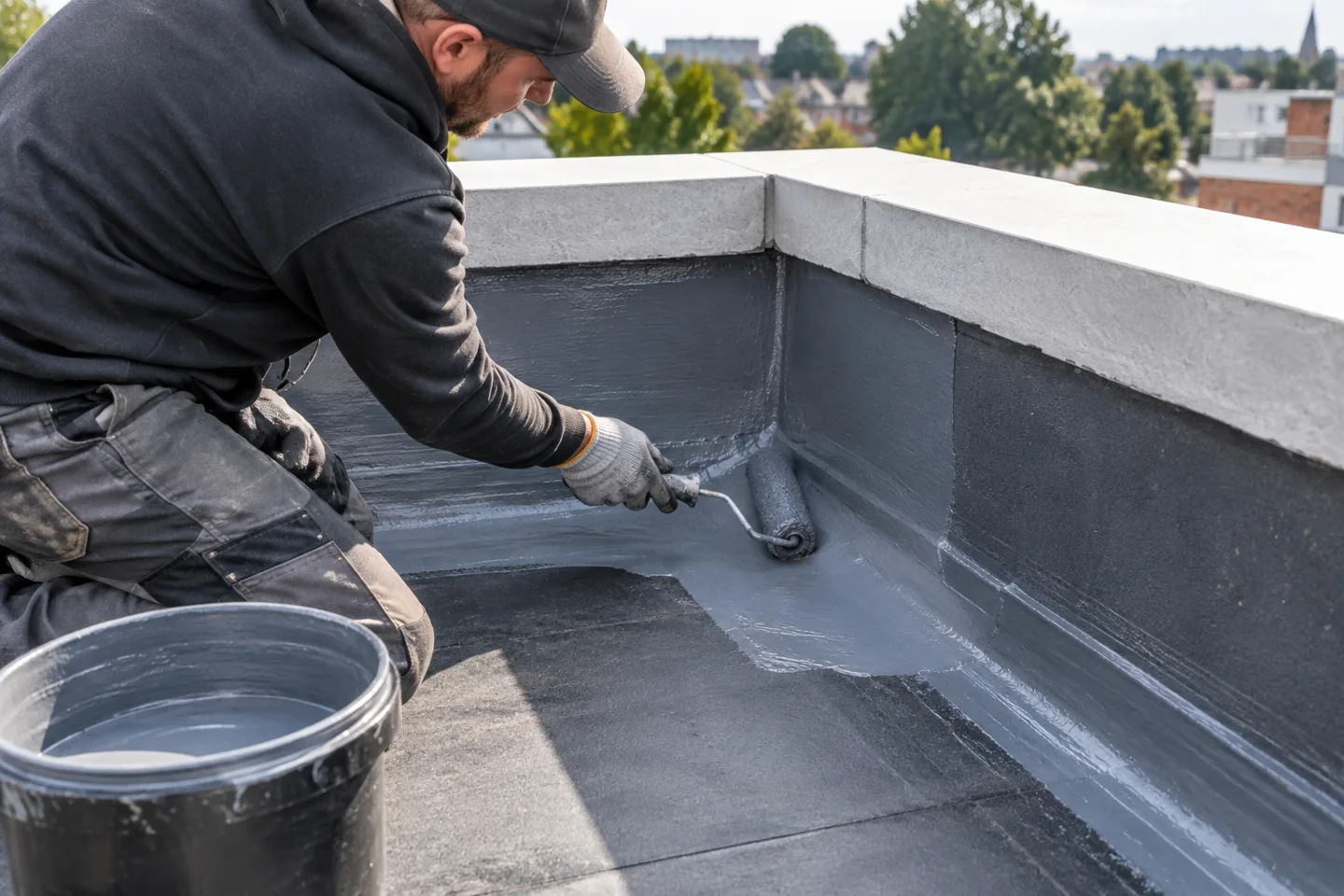
Assess whether a compatible waterproofing treatment can protect a sound roof surface after local defects are repaired.
Explore service ↗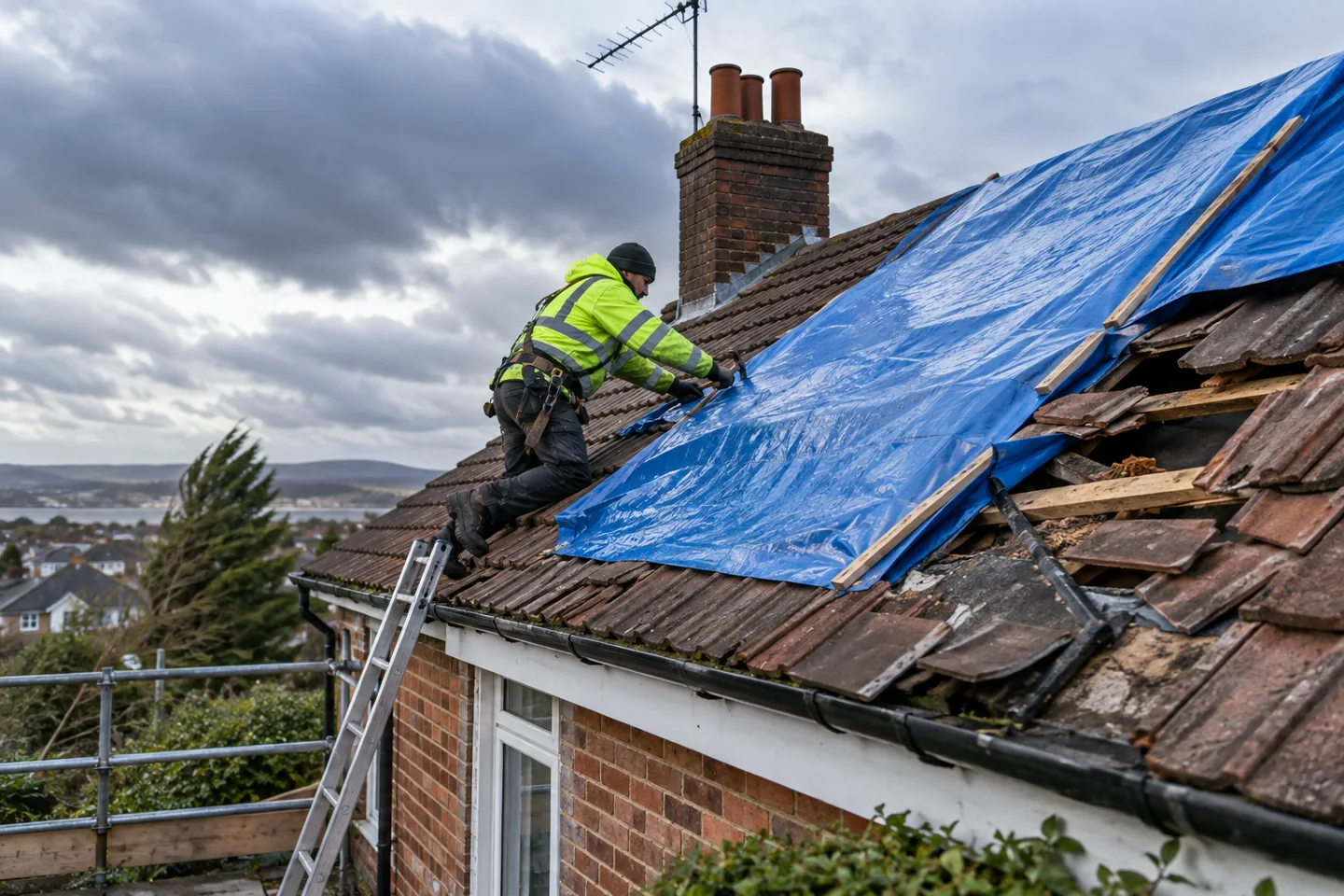
After wind or impact damage, identify loose coverings, protect exposed areas and plan the permanent roof repair.
Explore service ↗
Understand the condition of visible roof coverings, junctions and drainage before deciding which repairs to arrange.
Explore service ↗Practical answers about leaks, access, temporary protection and agreeing the work.
Describe the room affected, when the leak starts and whether wind makes it worse. Include the postcode, roof type if known and photographs taken safely from the ground.
Call to discuss the damage and keep people clear of the space below. The assessment considers loose materials, safe access and whether the exposed section needs temporary protection.
An isolated failed detail may be repairable. The condition of the surrounding covering and support determines whether a local repair or wider work should be considered.
Temporary protection limits exposure until a suitable permanent repair is possible. Its limitations and the follow-up work should be agreed separately.
The covering type, approximate age, previous patches and whether water remains after rain help identify repair options. Do not walk onto the roof to collect these details.
Tenants, landlords and property managers can enquire. Explain who can authorise work and how access to the affected property can be arranged.
Find your area in the England or London directory, then call with the full postcode. The team confirms availability and access before a visit is arranged.
The quotation depends on the defect, materials and access. Confirm what is included, any temporary work and how additional findings will be handled before work begins.
Have your postcode, roof photographs and access details ready when you call.